
Brand Strategy for Startups: A Step-by-Step Framework That Works
By Relish Team
Brand Strategy for Startups: A Step-by-Step Framework That Works
If you’re a startup founder, you already know this: building a product is hard. But building a brand that people instantly understand is even harder.
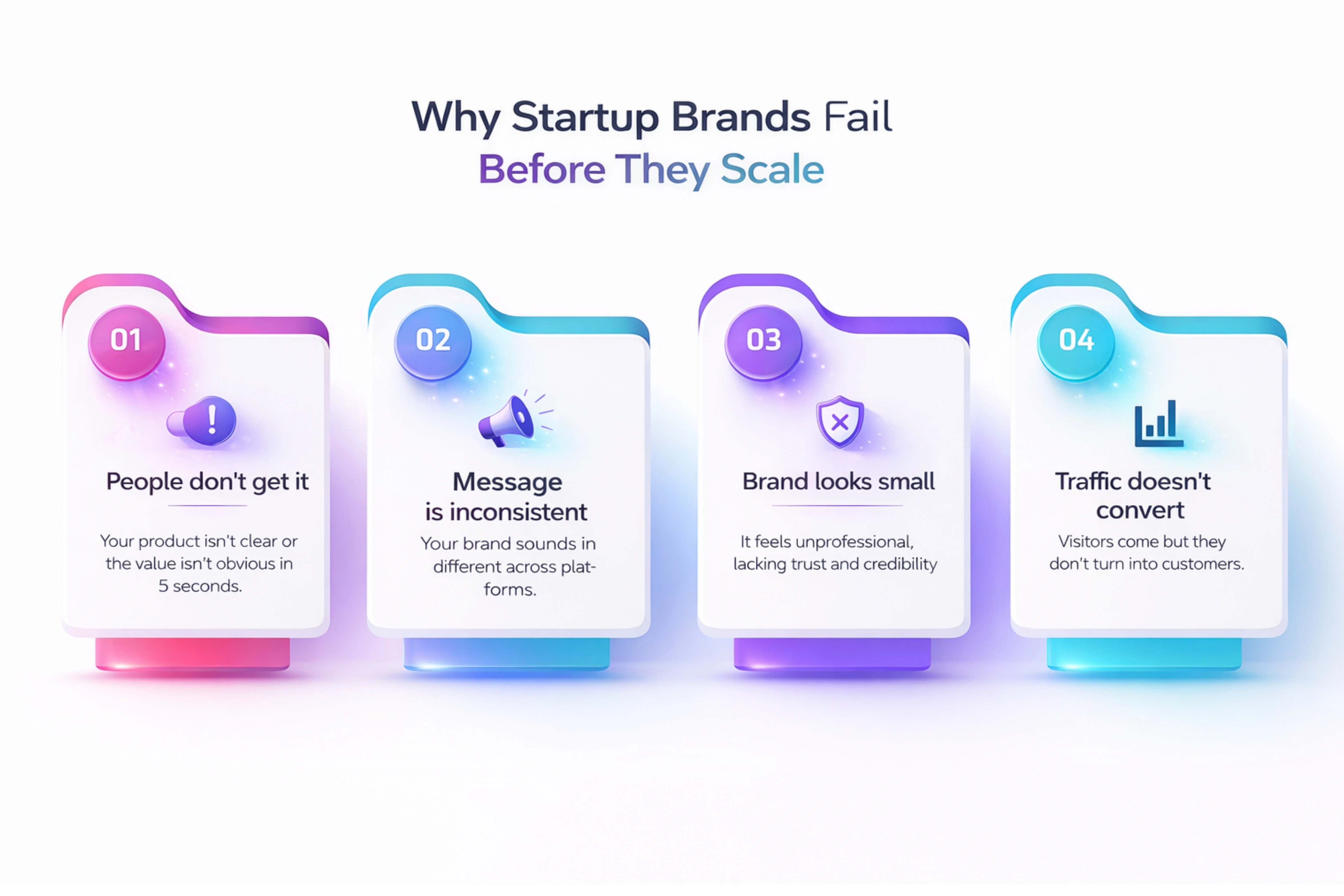
Many startups fail not because their product is bad, but because their brand feels confusing. People don’t “get it” in 5 seconds. Your website doesn’t sound clear. Your messaging changes on every platform. Your logo might look decent, but it doesn’t build trust.
That’s where brand strategy comes in.
In this guide, I’ll break down a simple, step-by-step brand strategy framework for startups that works in real life, not just in theory.
Why most startup brands fail before they even start
Startups move fast. They build, test, ship, and pivot quickly. But branding often gets treated like a “later problem.”
The result?
- People don’t understand what you do
- Your marketing costs more because your message doesn’t land
- Your website traffic doesn’t convert
- Your product looks like a “small business” even if it’s premium
The “logo-first” mistake that kills positioning
Most startups start with:
- ✅ logo → ✅ website → ✅ Instagram
…and only then think about brand strategy.
But that approach skips the most important part: positioning and messaging.
A good logo can’t save a confusing offer.
What customers and investors actually notice
Here’s what people judge instantly:
- Are you solving a real problem or not?
- Are you credible enough to trust?
- Do you look consistent and professional?
- Can they quickly explain your product or service to someone else?
Brand strategy helps you win these moments.
What brand strategy really means (in simple terms)
Brand strategy is the foundation of how your startup is understood.
It answers questions like:
- Who is this brand for?
- What do we want to be known for?
- Why should people choose us?
- How do we sound and look consistently everywhere?
Positioning, messaging, identity—what each one does
A strong brand strategy has three core parts:
- Brand positioning: where you fit in the market
- Brand messaging: what you say and how you say it
- Brand identity: how you look (visual system)
These three should work together as one system.
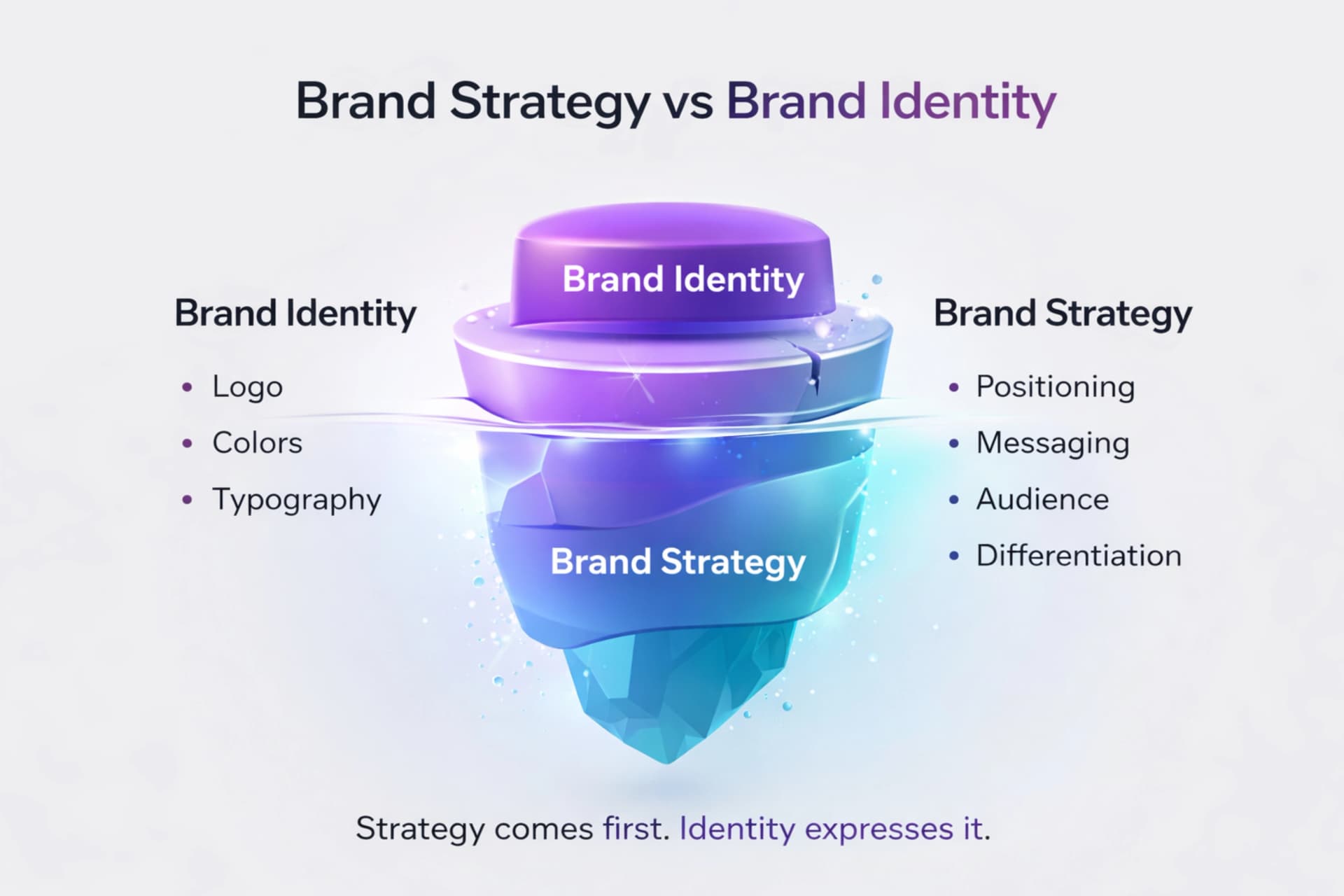
Brand strategy vs brand identity (not the same thing)
Many founders confuse these:
- Brand identity = logo, colors, typography, visuals
- Brand strategy = the thinking behind all of it
Your identity should express your strategy. But strategy must come first.
If you want a structured foundation for both, you can explore Relish’s Brand Strategy & Identity service.
Step-by-step brand strategy framework for startups
Here’s a startup-friendly framework you can apply even if you’re early-stage.
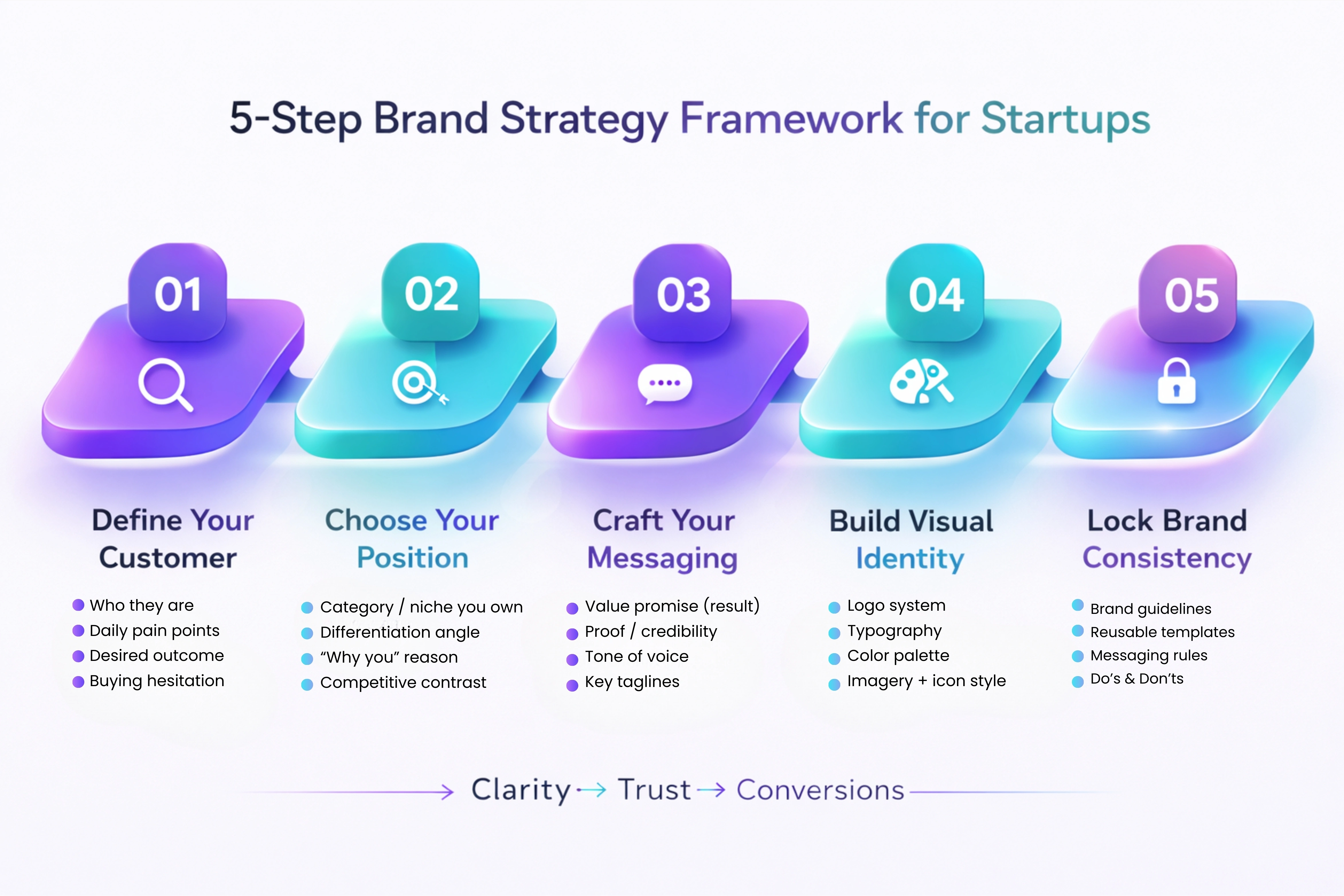
Step 1 — Define your ideal customer clearly
This is where most startups stay too broad.
Bad example:
- ❌ “Our customers are everyone who wants productivity.”
Better example:
- ✅ “We help small remote teams (5–50 people) track tasks and deadlines without complex tools.”
Ask these questions:
- Who is your target customer?
- What do they struggle with daily?
- What outcome do they want?
- What makes them hesitate before buying?
The clearer your audience, the easier your branding becomes.
Step 2 — Choose a market position you can own
Positioning is not “we are better.”
Positioning is “we are different in a specific way.”
Strong positioning angles that work for startups:
- fastest setup
- premium experience
- industry-specific solution
- automation-first
- done-for-you service
- AI-enabled efficiency (only if it’s real)
If you try to be everything, you’ll rank nowhere and convert less.
Step 3 — Craft your messaging (value, proof, tone)
Good messaging has 3 parts:
- Value: what you help people achieve
- Proof: why people should believe you
- Tone: how your brand sounds consistently
A clean messaging formula is:
> We help [audience] achieve [result] using [unique method], without [pain point].
Example:
“We help SaaS founders launch faster using scalable product design systems, without wasting months on redesigns.”
Also include proof like:
- number of projects delivered
- growth results
- testimonials
- clear outcomes
Messaging improves conversions because it removes doubts early.
Step 4 — Build your visual identity system (not just a logo)
A logo alone isn’t a brand identity.
A complete visual identity includes:
- logo system (primary + secondary versions)
- typography
- color palette
- spacing rules
- icon style
- imagery style
- UI elements (especially for tech brands)
This makes your brand look consistent across:
- website
- pitch deck
- social media
- product UI
- ads
To build your full logo and visual system, check Relish’s Logo & Visual Identity service.
Step 5 — Create brand guidelines for consistency
This is what helps startups look premium and consistent even while scaling.
Brand guidelines prevent problems like:
- random fonts in design
- mismatched colors
- different messaging tone across platforms
- inconsistent social visuals
- confusion between team members
Even a simple brand guideline system can include:
- logo use rules
- typography rules
- button styles (for product brands)
- tone of voice examples
- do’s and don’ts
To create a clear style guide for your brand, explore Brand Guidelines here.
Brand strategy examples that work in real life
Here’s how different startup types can apply brand strategy.
Example 1: B2B SaaS startup
- Positioning: “All-in-one reporting dashboard for e-commerce founders”
- Messaging tone: clear, smart, no fluff
- Visual identity: clean UI visuals, product screenshots, modern typography
What works:
- simple promise
- specific niche
- product-led branding
Example 2: Service business startup
- Positioning: “Done-for-you performance marketing for premium real estate”
- Messaging tone: confident and results-driven
- Visual identity: premium, minimal, trust-based visuals
What works:
- high-ticket branding
- conversion messaging
- strong credibility elements
Example 3: Consumer brand
- Positioning: “Plant-based snacks for busy professionals”
- Messaging tone: friendly, simple, high-energy
- Visual identity: strong colors, packaging-first approach
What works:
- emotional connect
- fast recognisability
- consistent brand personality
When to do a brand refresh (before it becomes expensive)
Many startups avoid refreshing their brand because they think:
“We’ll confuse users.”
But the bigger risk is staying unclear.
Signs you may need a refresh:
- People ask “what do you do?” even after seeing your site
- You get website traffic but low conversions
- Your product looks premium but your brand looks basic
- Your pitch deck doesn’t match your website
- Your competitors look clearer than you
A brand audit helps you identify what’s broken:
- messaging gaps
- positioning weakness
- design inconsistency
- unclear user journey
Conclusion
Brand strategy helps startups grow faster because it removes confusion, builds trust, and makes marketing easier. When your positioning, messaging, and identity work together, people understand you instantly, and that improves conversions.
If you’re building a startup, start with clarity first, then build the visuals, and finally lock consistency through brand guidelines. That’s how your brand becomes scalable and recognizable across every platform.
