
How to Design Digital Products That Scale With Your Business
By Relish Team
Many digital products fail not because they lack features — but because they weren't designed to grow.
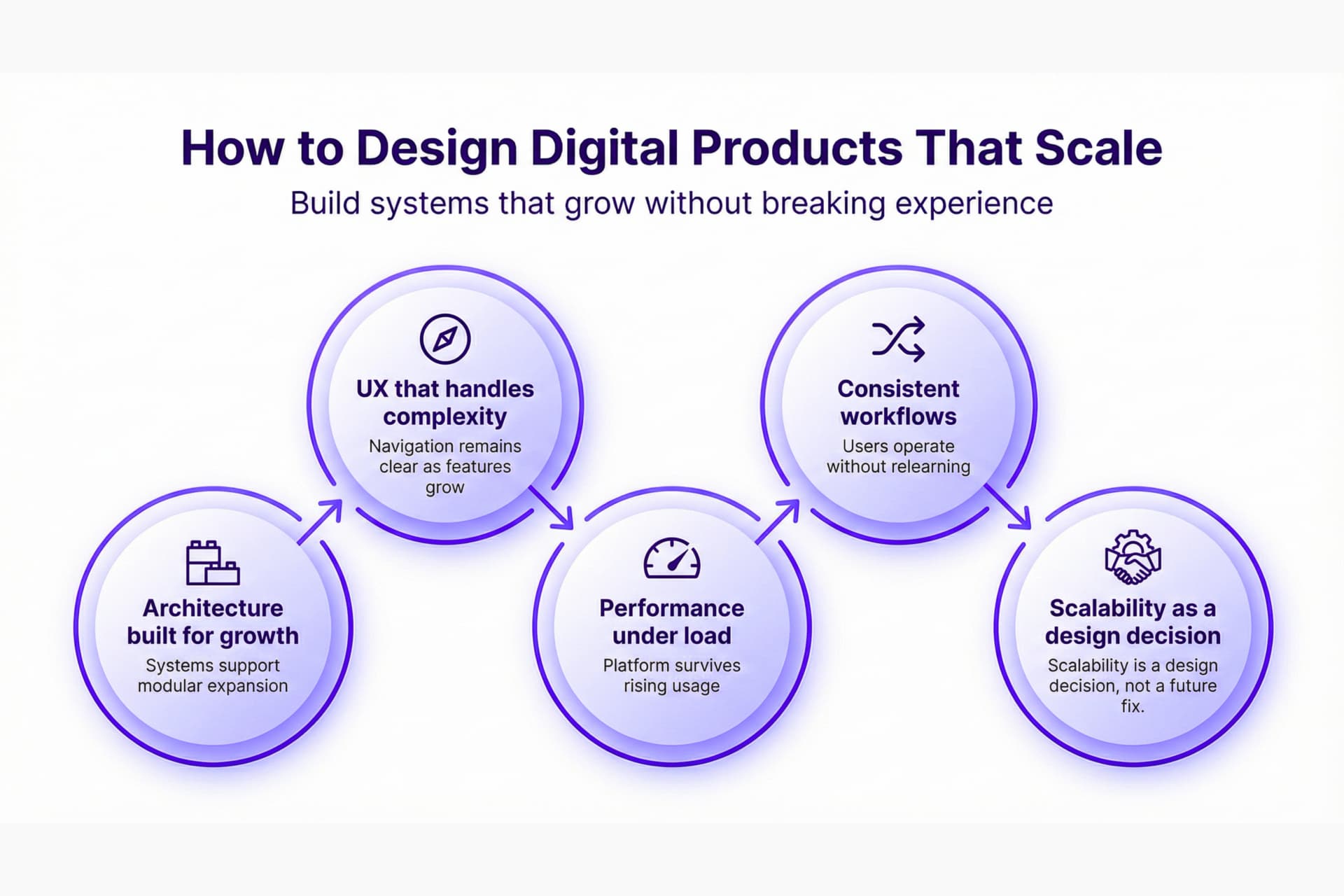
A product that works for 100 users can collapse under 10,000 if its architecture, UX, and workflows weren't built with scalability in mind.
Scaling isn't just about servers or code. It's about designing systems that expand gracefully — without creating friction, confusion, or operational chaos.
This guide breaks down how scalable product design actually works — from infrastructure thinking to user experience strategy.
Scaling Is a Design Decision — Not a Technical Afterthought
Most teams think scalability begins when growth arrives.
In reality:
> Scalability is decided during design.
Products built without foresight often run into:
- Brittle workflows
- Cluttered interfaces
- Performance bottlenecks
- Inconsistent user journeys
Fixing these later is expensive. Designing for scale from day one reduces future rebuild cycles.
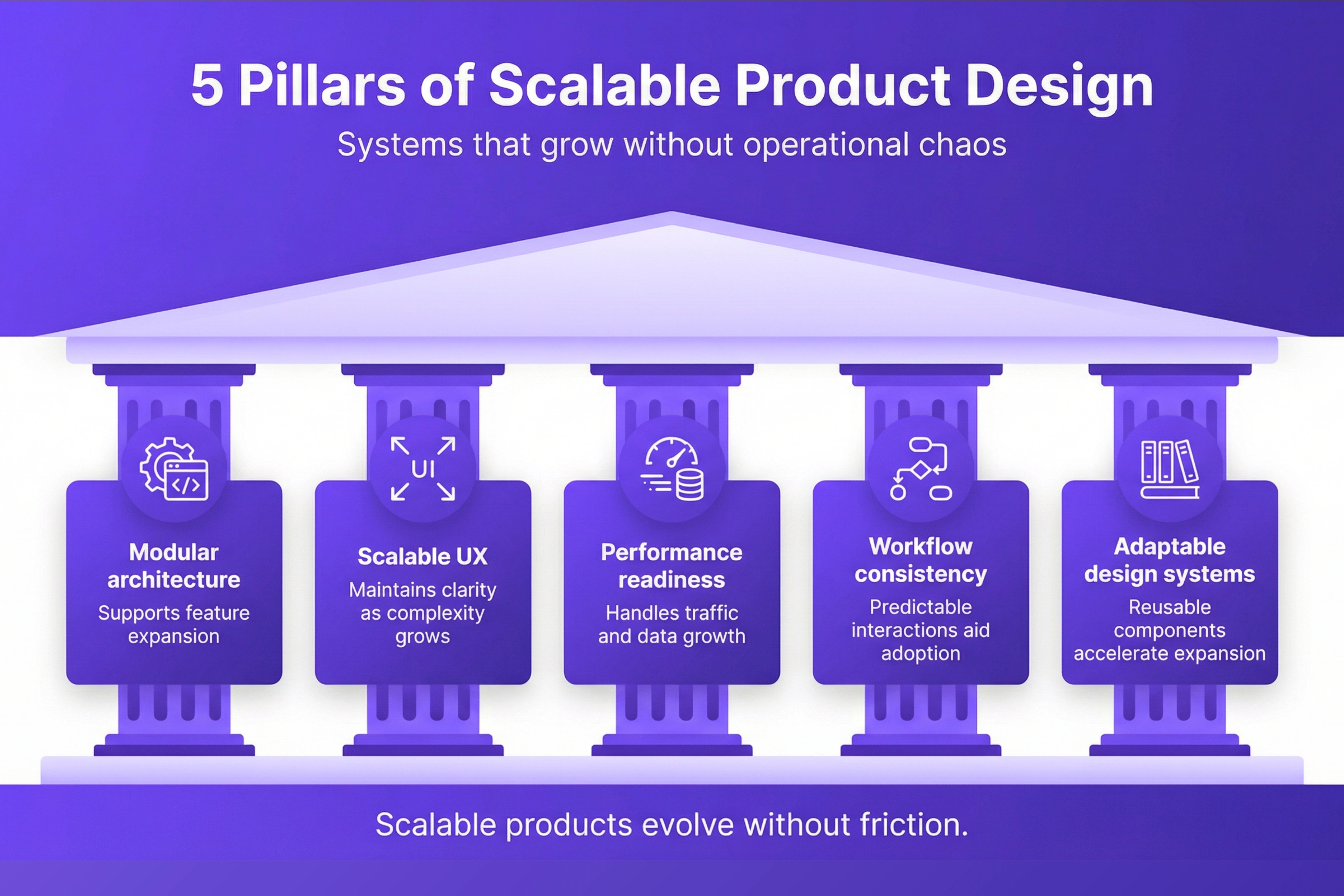
The 5 Pillars of Scalable Product Design
Think of scalability as a layered system — not a single solution.
1. Architecture That Grows With Demand
Your infrastructure must support:
- Modular expansion
- Feature layering
- Data growth
Rigid systems resist growth. Flexible systems absorb it.
2. UX That Survives Complexity
As products grow, features multiply.
Without thoughtful UX:
- Navigation becomes confusing
- Workflows slow down
- Users disengage
3. Performance Under Pressure
Growth increases:
- Concurrent users
- Data operations
- Integration demands
Design decisions should anticipate load, not react to it.
4. Workflow Consistency
Every new feature should feel familiar. Predictable patterns reduce learning friction and support faster adoption.
5. Adaptable Design Systems
Reusable components enable:
- Faster iteration
- Visual consistency
- Easier expansion
Design systems are scalability engines disguised as UI structure.
What Happens When Products Aren't Designed to Scale
Scaling without design planning often triggers:
- Patchwork UX
- Performance slowdowns
- Escalating support costs
- Feature sprawl
- User confusion
Growth becomes stressful instead of empowering.
A Practical Scalability Framework You Can Apply Today
Instead of guessing, evaluate your product using this checklist:
System readiness — Can new features integrate cleanly? UX resilience — Does navigation remain clear as complexity increases? Performance headroom — Can the platform handle traffic spikes? Design consistency — Do new modules feel cohesive? Expansion flexibility — Can workflows evolve without rebuilds?Weak areas signal future bottlenecks.
The Question Growing Teams Always Ask
How do you design a digital product that scales without rebuilding everything later?
The answer isn't a single technology — it's a layered strategy:
- Modular architecture planning
- Scalable UX frameworks
- Reusable design systems
- Performance-first engineering
- Workflow standardization
When these foundations are intentional, growth becomes an upgrade — not a disruption.
Real-World Scenario: Scaling Without Structural Planning
Imagine a SaaS platform that grows quickly:
New features are added reactively. Navigation expands. Interfaces clutter. Performance dips.
Users experience:
- Slower workflows
- Inconsistent UI
- Rising friction
The product technically "scales" — but usability collapses.
This is the cost of scaling without design foresight.
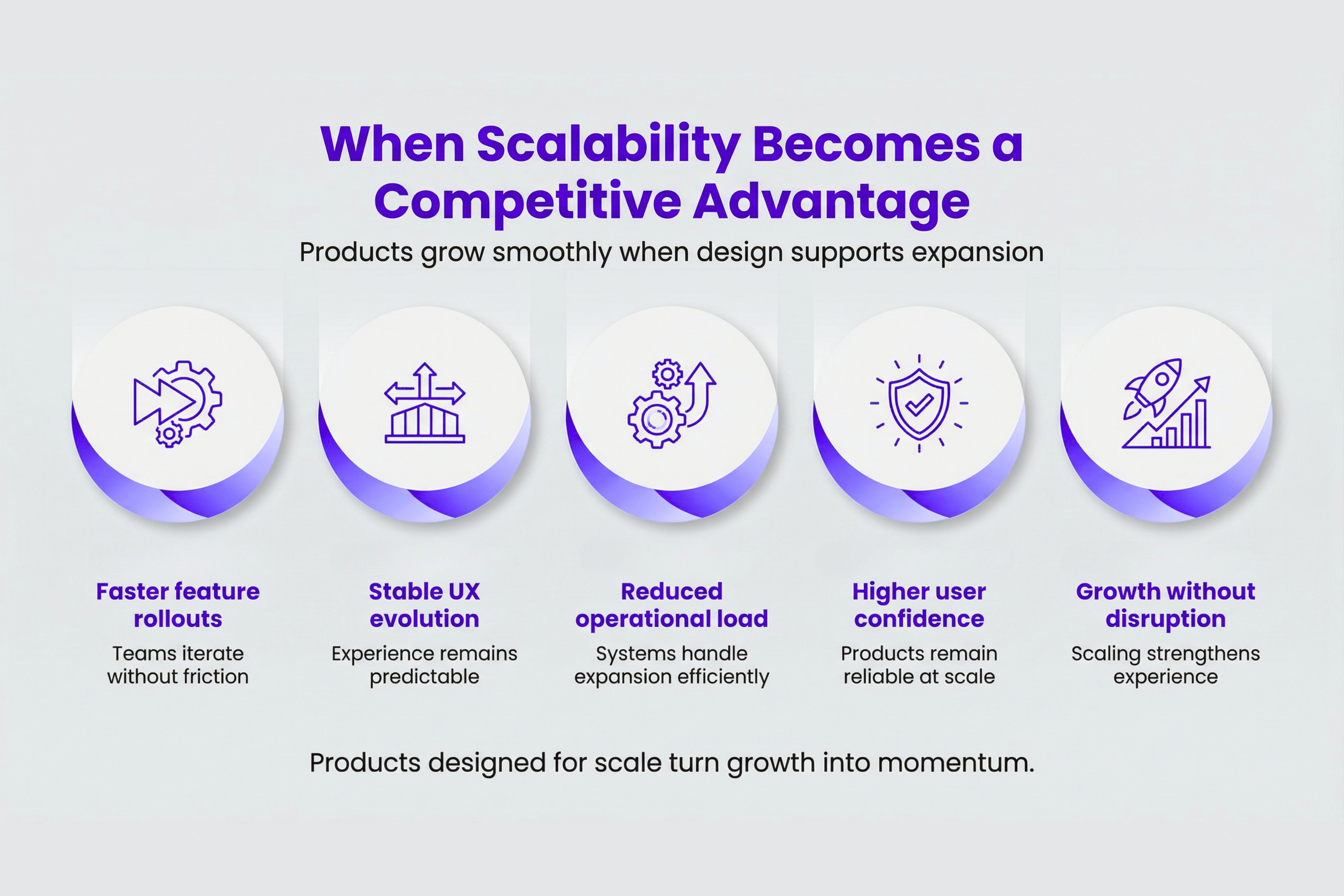
Turning Scalability Into a Competitive Advantage
Products designed for scale experience:
- Smoother feature rollouts
- Predictable UX evolution
- Lower operational friction
- Stronger user confidence
Scaling becomes an advantage — not a recovery process.
Designing Today for Tomorrow's Growth
Scalable products aren't accidental.
They're built through:
- Intentional architecture
- Disciplined UX planning
- Performance-aware workflows
- Structured design systems
When scalability is embedded early, growth feels natural — not forced. Products evolve smoothly, teams move faster, and users remain confident.
That's how scalable design turns expansion into momentum.
Teams that treat product development as a long-term architecture investment — not just a feature delivery sprint — consistently build platforms that grow without breaking.
