
SaaS MVP Feature Checklist: What to Build in Version 1
By Relish Team
SaaS MVP Feature Checklist: What to Build in Version 1
If you’re building a SaaS product, the pressure to “launch something big” is real. Founders often feel like the MVP should look complete, cover every use case, and impress everyone at once.
But that mindset is exactly why many SaaS MVPs fail.
The truth is simple: your MVP doesn’t need more features. It needs the right features. The features that deliver one clear outcome, prove demand, and help you learn fast without burning months of development time.
This guide will walk you through the SaaS MVP features you should build first, what to avoid early, and how to structure your MVP so it’s fast to launch and easy to scale.
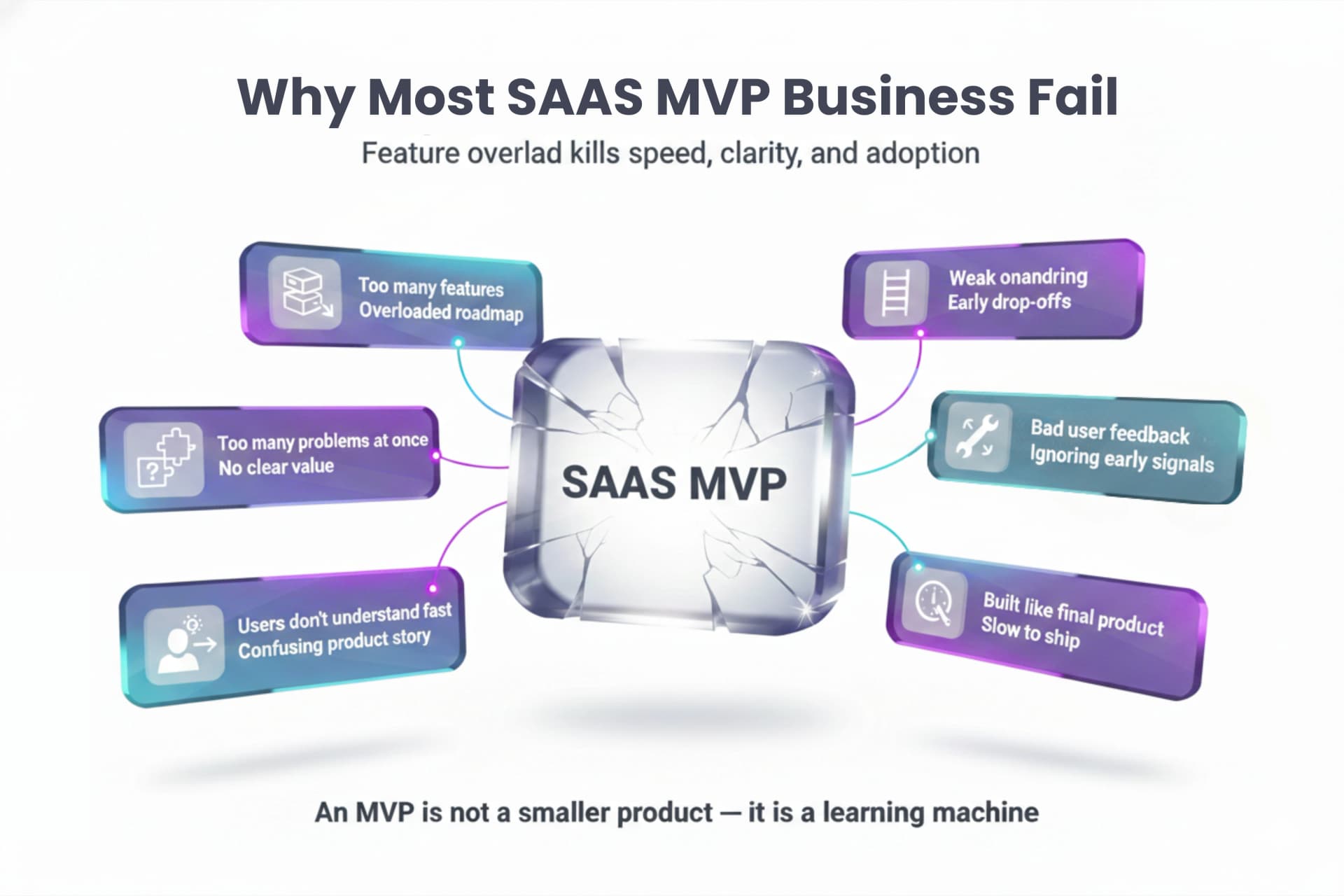
Why most SaaS MVPs fail (feature overload)
A SaaS MVP usually fails for one of these reasons:
- It tries to do too much
- It solves too many problems at once
- Users don’t understand the product quickly
- Onboarding is weak, so people drop off early
- The MVP is built like a final product, not a test
The biggest mistake is thinking the MVP is a smaller version of the final platform. It’s not.
An MVP is a learning machine. It should help you answer one question:
> “Will users pay for this solution?”
What is an MVP
An MVP (Minimum Viable Product) is the simplest version of your SaaS product that can deliver value to real users and collect feedback.
It is not:
- a full-feature product
- a polished enterprise platform
- a complete automation system
- a “perfect first version”
A strong MVP is designed to validate one thing: your core value.
The core SaaS MVP features you should build first
To keep this practical, focus on features that support three things:
- value delivery
- user adoption
- feedback collection
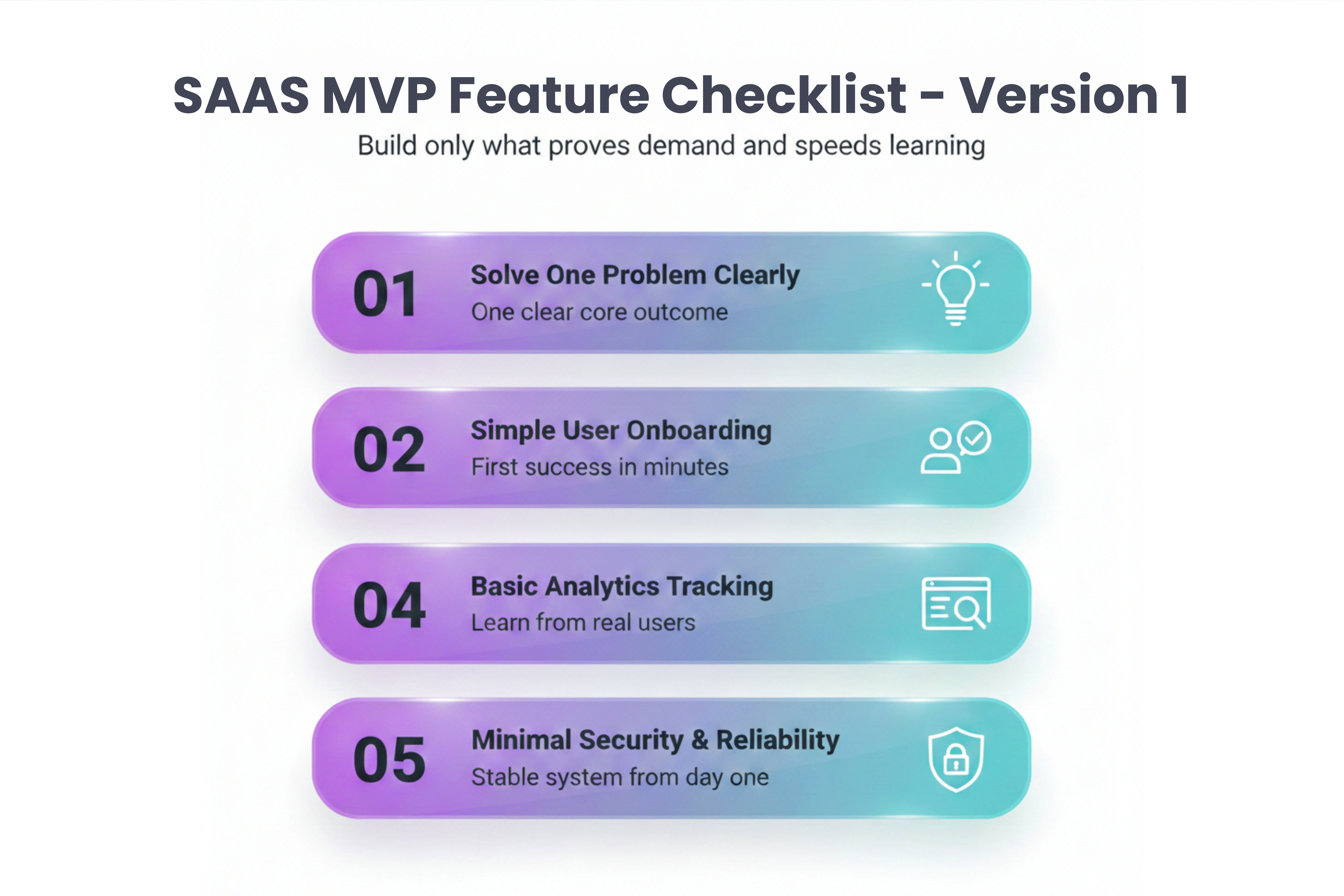
1) A single core outcome (your main feature)
Your MVP should solve one problem clearly.
Examples:
- “Generate invoices faster”
- “Track team performance in one dashboard”
- “Automate lead follow-ups”
- “Schedule content in minutes”
If users can’t describe what your product does in one sentence, your MVP is not clear enough.
2) User onboarding that removes confusion
Most SaaS products lose users in the first 3 minutes. That’s not because the product is bad. It’s because onboarding is unclear.
Your MVP should include:
- a clean signup/login flow
- a simple first-step guide
- a “first success moment” within minutes
- basic tooltips (only where needed)
Onboarding is not “extra.” It’s a growth feature.
3) A simple dashboard or main screen
SaaS products often live and die by the dashboard experience.
Even if your product has one core feature, you need one clear place where users can:
- see their data
- take their next step
- understand progress
The first version doesn’t need advanced filters and complex charts. It needs clarity.
4) Basic analytics tracking (so you don’t guess)
If you don’t track user behavior, you won’t know what’s working.
Your MVP must track:
- signups
- activation (first key action completed)
- drop-off points
- feature usage
- retention basics
This helps you answer questions like:
- where are users leaving?
- what feature creates “stickiness”?
- which steps cause confusion?
5) A feedback loop inside the product
You do not need a huge support system for MVP. You need an easy way to learn.
Add simple feedback methods like:
- “Was this helpful?”
- one short survey after activation
- a feedback button
- email follow-up after 3 days
Your MVP becomes better when you collect real feedback early, not only opinions from friends.
6) Admin controls (minimal, but necessary)
Founders forget this and regret it later.
Even basic admin access helps you:
- manage users
- view data issues
- resolve edge cases quickly
- handle basic account support
You don’t need a full admin suite. But you do need control.
7) Security basics and reliability
Security is not optional, even for MVP.
You don’t need enterprise-grade compliance on Day 1, but you must have:
- secure authentication
- stable data handling
- role controls if the product needs it
- safe password flow
A slow or buggy MVP will lose users even if the idea is good.
SaaS MVP features to skip early (to save months)
This is where you win time.
1) AI features before product-market fit
AI can be powerful, but it also increases complexity.
AI makes sense only when:
- your product already has usage patterns
- you know what users repeat daily
- you have enough data to improve outcomes
If you add AI too early, you’ll burn time building something users may not even need.
2) Multi-role permissions (unless required)
Permissions get complicated fast.
If your MVP is for internal teams and roles are essential, build basic roles. Otherwise, keep it simple in MVP and upgrade later.
3) Multi-language and multi-region from day one
Global scaling sounds exciting, but MVP should validate the core product first.
4) Advanced customization and theme options
Users don’t care about themes if your product doesn’t solve the problem.
Build value first. Customization comes after.
5) Too many integrations early
Integrations are useful, but they also increase testing and maintenance.
Start with:
- 1–2 key integrations only
- the ones your buyer truly needs to use the product
SaaS MVP feature prioritization (a simple method)
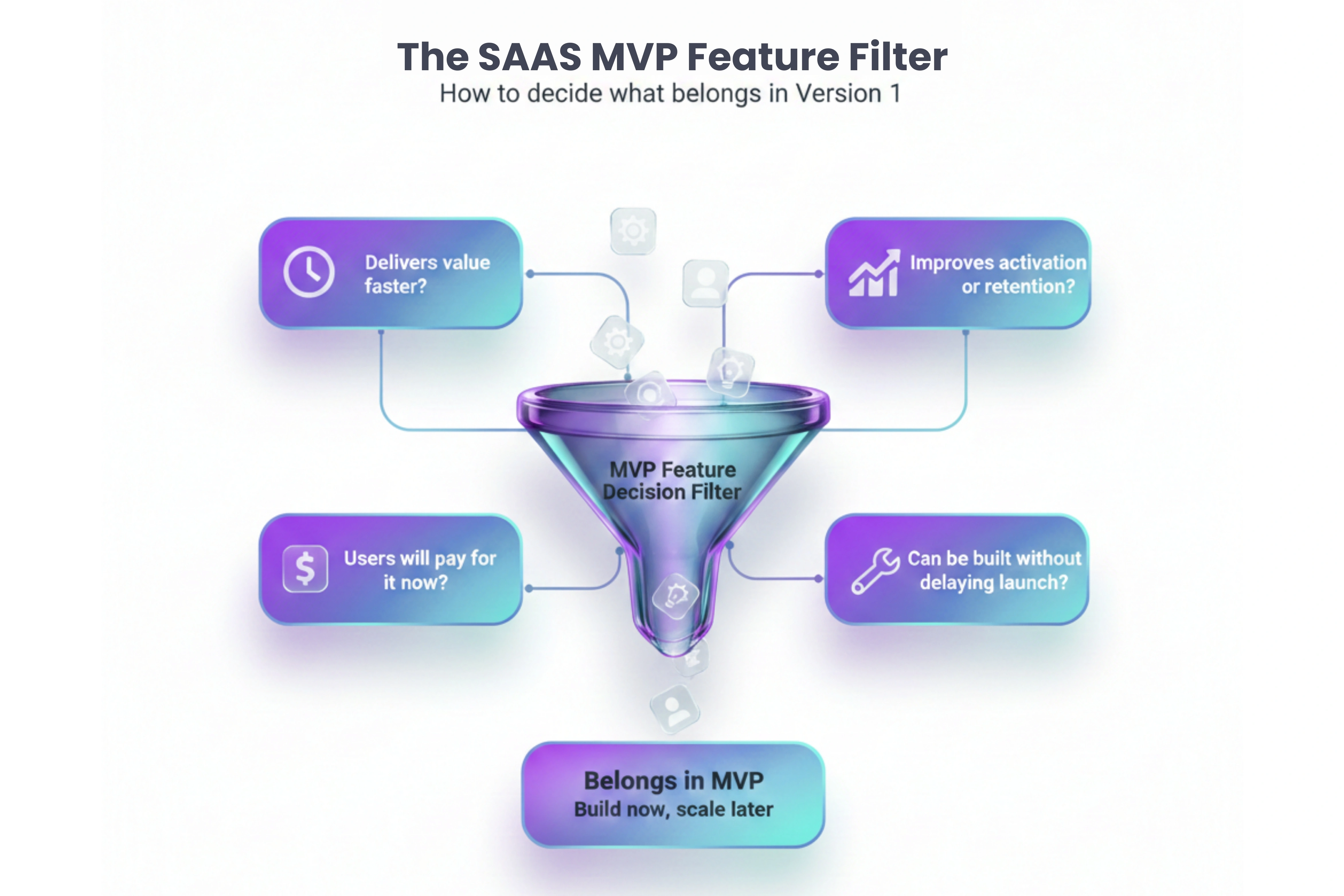
If you’re stuck between “what to build first,” use this quick filter:
Ask for every feature:
- Does it help users get value faster?
- Does it improve activation or retention?
- Will users pay for this right now?
- Can we build it without slowing the launch?
If the answer is “no” to most, it’s not MVP.
Your MVP should feel small, but effective.
MVP launch plan: how to ship faster without regret
A clean MVP launch plan looks like this:
- Build the core workflow
- Make onboarding simple
- Add basic tracking
- Release to a small group
- Improve based on usage, not opinions
- Scale features in V2
The goal is not perfection. The goal is speed and learning.
Key Takeaways for Your SaaS MVP
The best SaaS MVP is not the one with the most features. It’s the one that delivers one clear outcome, helps users adopt the product quickly, and gives you real feedback to improve the next version.
Build the essentials first: onboarding, core value, a clean dashboard experience, and tracking. Skip AI, heavy customization, and advanced integrations until your product proves demand. That’s how you launch faster, reduce waste, and move toward product-market fit with confidence.
Also Read: MVP: Why its a great way to test your Idea
