
SEO for Generative Search: How to Optimize for AI and LLM Platforms
By Relish Team
SEO for Generative Search: How to Optimize for AI and LLM Platforms
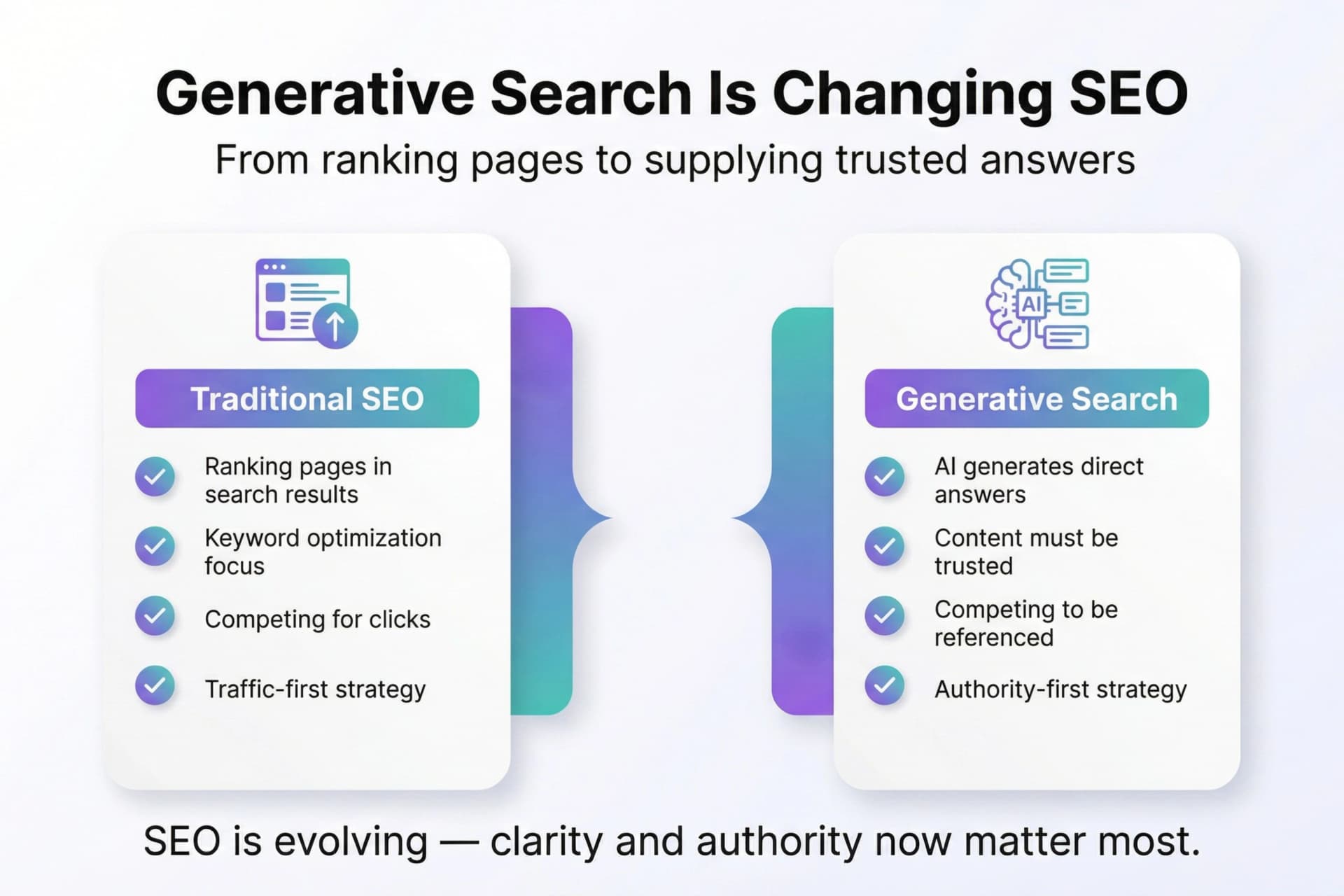
Search is changing faster than most businesses realize. Traditional SEO focused on ranking pages in search results. Generative search — powered by AI systems like Google AI Overviews, ChatGPT-style assistants, and LLM-driven platforms — changes the game entirely.
Instead of showing a list of links, these systems generate answers. That means your content is no longer competing only for rankings — it’s competing to be trusted enough to be quoted, summarized, or referenced by AI.
This isn’t about abandoning SEO. It’s about evolving it.
In this article, we’ll break down how generative search works — and how you can optimize for it in a practical, actionable way.
Understanding How Generative Search Actually Chooses Content
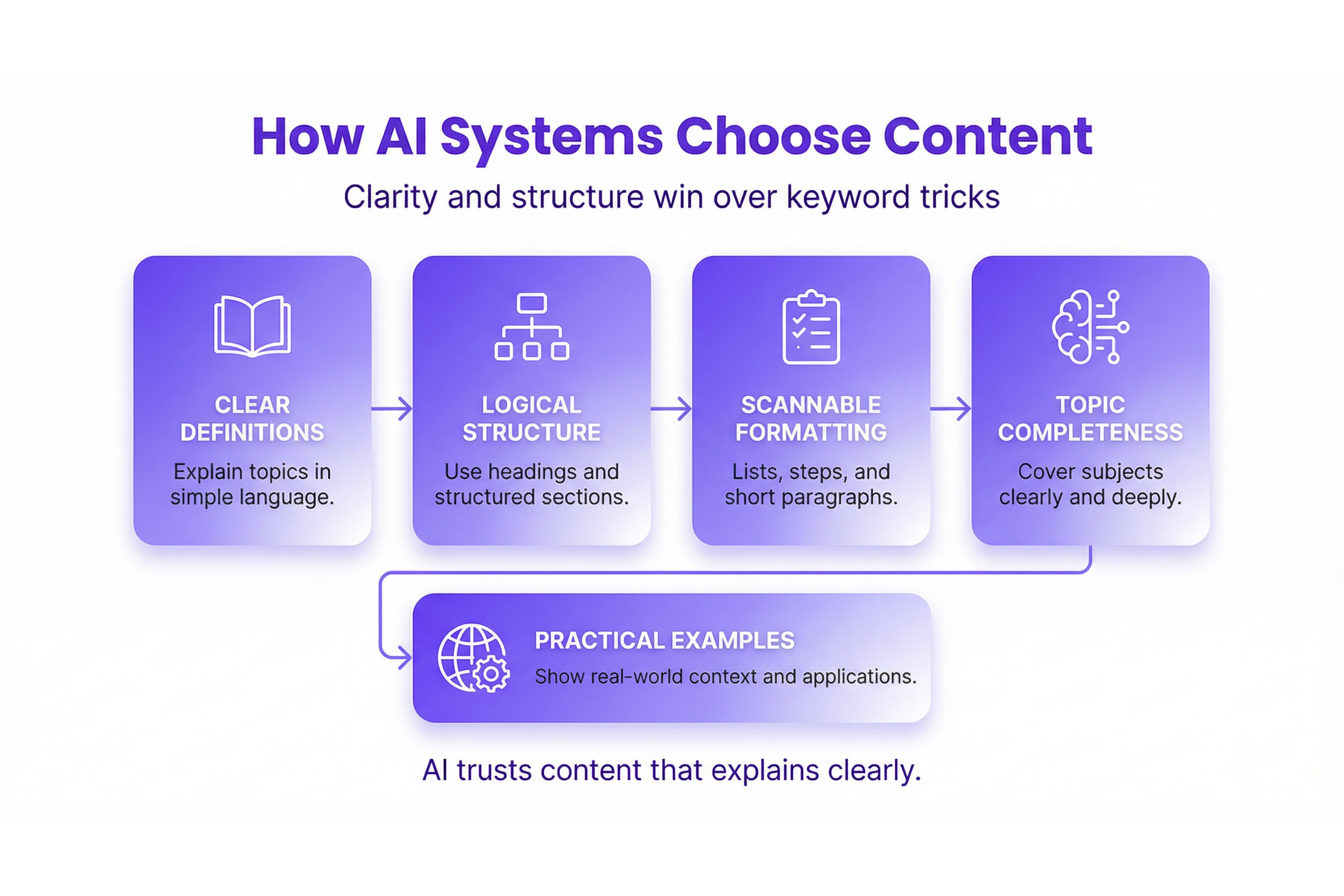
AI-driven search engines don’t “rank” content the same way traditional algorithms do.
They look for:
- Clear, structured information
- Authority signals
- Contextual relevance
- Factual clarity
- Semantic depth
In simple terms:
> AI favors content that explains things well, not content that tries to trick algorithms.
This means optimization now focuses on clarity + expertise + structure rather than keyword density.
The Core Shift: From Ranking Pages → Supplying Answers
Traditional SEO asked:
> “How do I rank for this keyword?”
Generative SEO asks:
> “Would an AI trust this page to explain the topic?”
That changes how content should be built.
What AI Systems Prefer
- Step-by-step explanations
- Definitions written in plain language
- Logical structure
- Scannable formatting
- Topic completeness
Think of your content as:
👉 A reliable reference source — not just 👉 a keyword landing page.
Content Structure That AI Systems Understand
AI models parse content structurally. Clean formatting increases the chance of being extracted or summarized.
Practical Structure Guidelines
- Use layered headings
- Break complex ideas into:
Example Structure AI Loves
Instead of:
> One long paragraph explaining optimization…
Use:
1. Define the concept clearly 2. Explain the process 3. Provide examples 4. Add practical application
This mirrors how AI learns and summarizes.
Write Like You’re Explaining to a Smart Human — Not a Bot
AI rewards clarity.
Bad generative SEO looks like:> “Best SEO optimization strategy platform solution…”
Good generative SEO looks like:> “Generative search systems prioritize content that explains a topic clearly, step by step.”
Write for understanding first. Algorithms follow.
Authority Signals Matter More Than Ever
AI platforms are cautious. They favor sources that appear credible.
You strengthen authority by:
- Publishing topic clusters (not isolated posts)
- Referencing real-world applications
- Explaining *why*, not just *what*
- Showing depth of knowledge
Authority today isn’t about backlinks alone — it’s about demonstrating expertise.
Optimize for Semantic Coverage — Not Just Keywords
Generative systems interpret context.
If your article is about generative SEO, it should naturally include:
- AI search behavior
- LLM content interpretation
- Answer-driven formatting
- Structured explanation
This builds a semantic ecosystem around your topic.
Avoid forcing keywords. Focus on topic completeness.
Practical Steps to Optimize for Generative Search
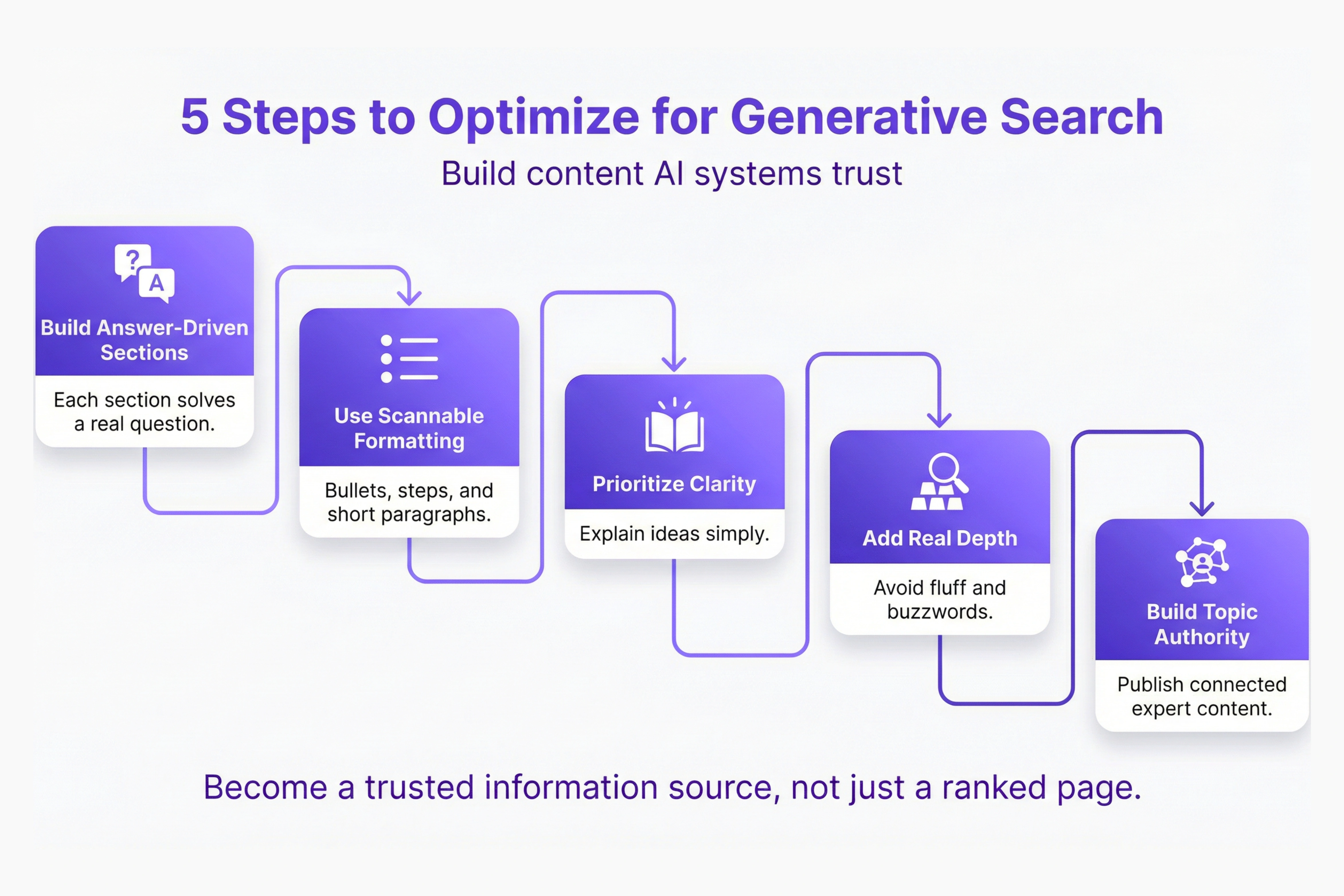
Here’s the actionable framework most businesses miss:
Step 1 — Build Answer-Driven Sections
Each section should solve a specific question.
Examples:
- What is generative search?
- How does AI evaluate content?
- How do I structure content for AI-driven platforms?
Step 2 — Add Scannable Formatting
Use bullets, steps, short paragraphs, and clear subheadings so both humans and AI can quickly understand the flow.
Step 3 — Prioritize Clarity Over Cleverness
AI extracts clear explanations — not marketing slogans.
Replace:
> “We revolutionize next-gen visibility.”
With:
> “We help brands create structured, educational content that AI systems can easily understand, trust, and reference.”
Step 4 — Create Depth, Not Fluff
Explain mechanisms, not buzzwords:
- How AI parses content
- What “semantic relevance” really means
- Why structure impacts how content is summarized
Step 5 — Maintain Topical Authority
Publish related content that reinforces expertise — for example:
- Articles on AI search behavior
- Guides on content structure and UX
- Case studies on SEO and conversion impact
Topical authority signals to AI: *“This brand truly understands this space.”*
Common Mistakes That Kill Generative SEO Visibility
Avoid:
- Vague marketing copy
- Keyword stuffing
- Overly long paragraphs
- No structure
- Shallow explanations
- Clickbait headlines with no substance
AI systems skip content that feels promotional without informational value.
The Bigger Picture: Why This Matters for Future Visibility
Generative search isn’t replacing SEO — it’s reshaping discoverability.
Businesses that adapt now will:
- Appear in AI-generated answers
- Build trust signals
- Increase organic exposure
- Stay ahead of competitors still optimizing for old systems
This is less about gaming algorithms — and more about becoming a reliable information source.
Teams that approach SEO this way consistently produce content that both humans and AI want to reference.
That’s exactly the mindset modern digital partners like Relish Developers bring — blending structured content strategy, UX thinking, and technical SEO to future-proof visibility rather than chase trends.
