
What Is Search as a Service? (And Why Your Product Needs It in 2026)
By Relish Team
Modern digital products are no longer judged just by features — they're judged by how quickly users can find what they need.
Search has evolved from a simple utility into a core product experience. Users expect instant, intelligent, typo-tolerant, context-aware results — whether they're browsing an ecommerce store, navigating dashboards, or searching SaaS documentation.
This is where Search as a Service enters the picture.
Instead of building complex search infrastructure from scratch, businesses can plug into scalable, AI-powered search systems designed to deliver fast, relevant, and intelligent results.
Let's unpack what that means — and why it's becoming essential.
What Search as a Service Actually Means
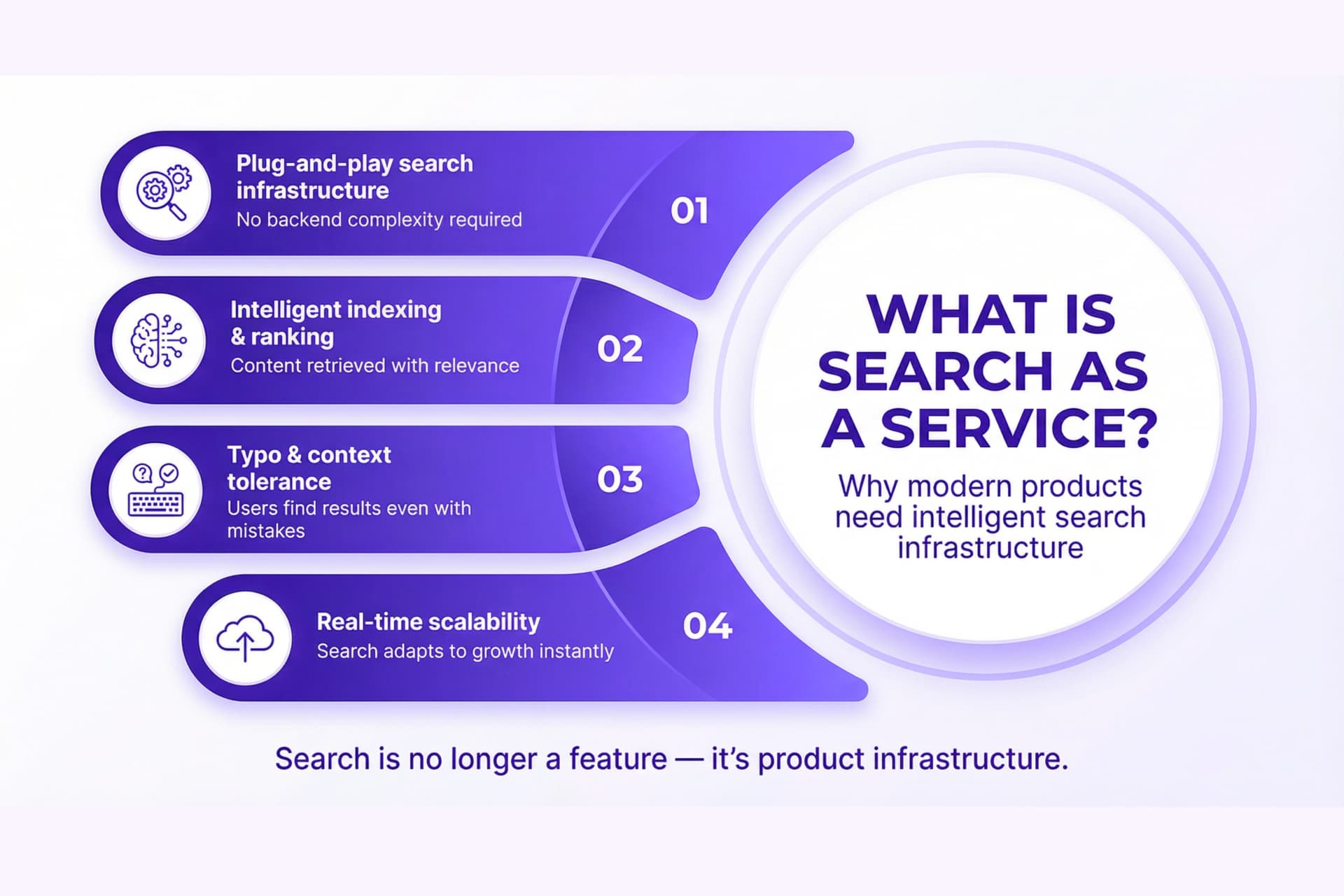
Search as a Service is a cloud-based search infrastructure that allows applications to deliver high-performance search experiences without managing backend complexity.
Instead of engineering:
- Indexing engines
- Ranking algorithms
- Typo handling
- Scalability infrastructure
...you integrate a dedicated search platform that handles it for you.
Think of it as:
> A plug-and-play intelligence layer for product discovery.
Why Traditional Search Systems Fall Short
Many products still rely on basic database queries or outdated indexing systems.
That leads to:
- Slow search results
- Poor relevance
- No personalization
- Inability to scale
- Weak filtering
Modern users interpret bad search as:
👉 bad product experience.
Search quality directly influences trust, retention, and conversions.
How Modern Search Systems Work
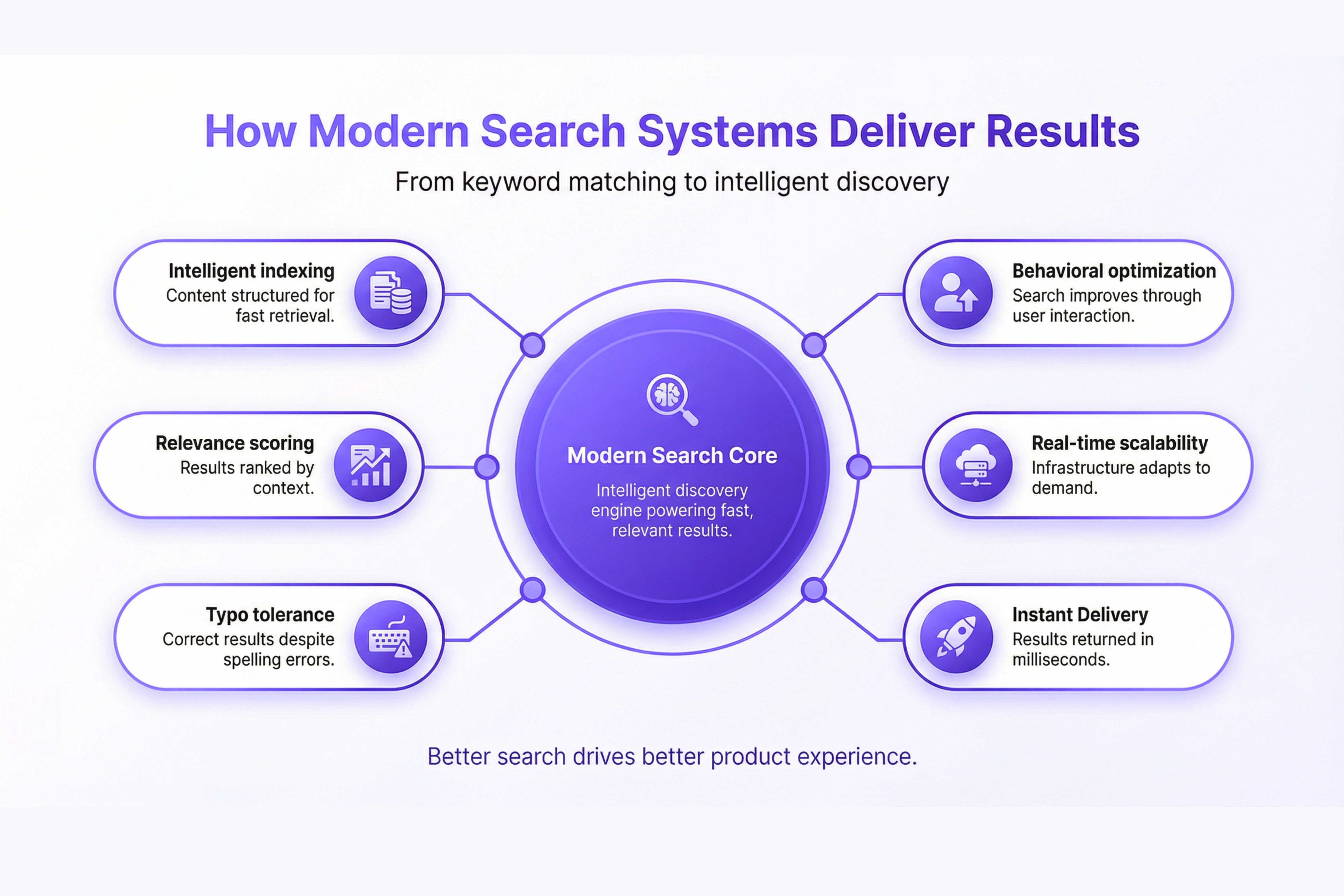
Today's search platforms combine:
Intelligent Indexing
Content is structured and continuously optimized for retrieval.Relevance Scoring
Results are ranked based on context, not just keyword matching.Typo Tolerance
Users get correct results even when spelling fails.Behavioral Optimization
Search improves based on user interaction patterns.Real-Time Scalability
Infrastructure adapts instantly to usage spikes.This is what transforms search from a feature into a growth engine.
Business Benefits of Search as a Service
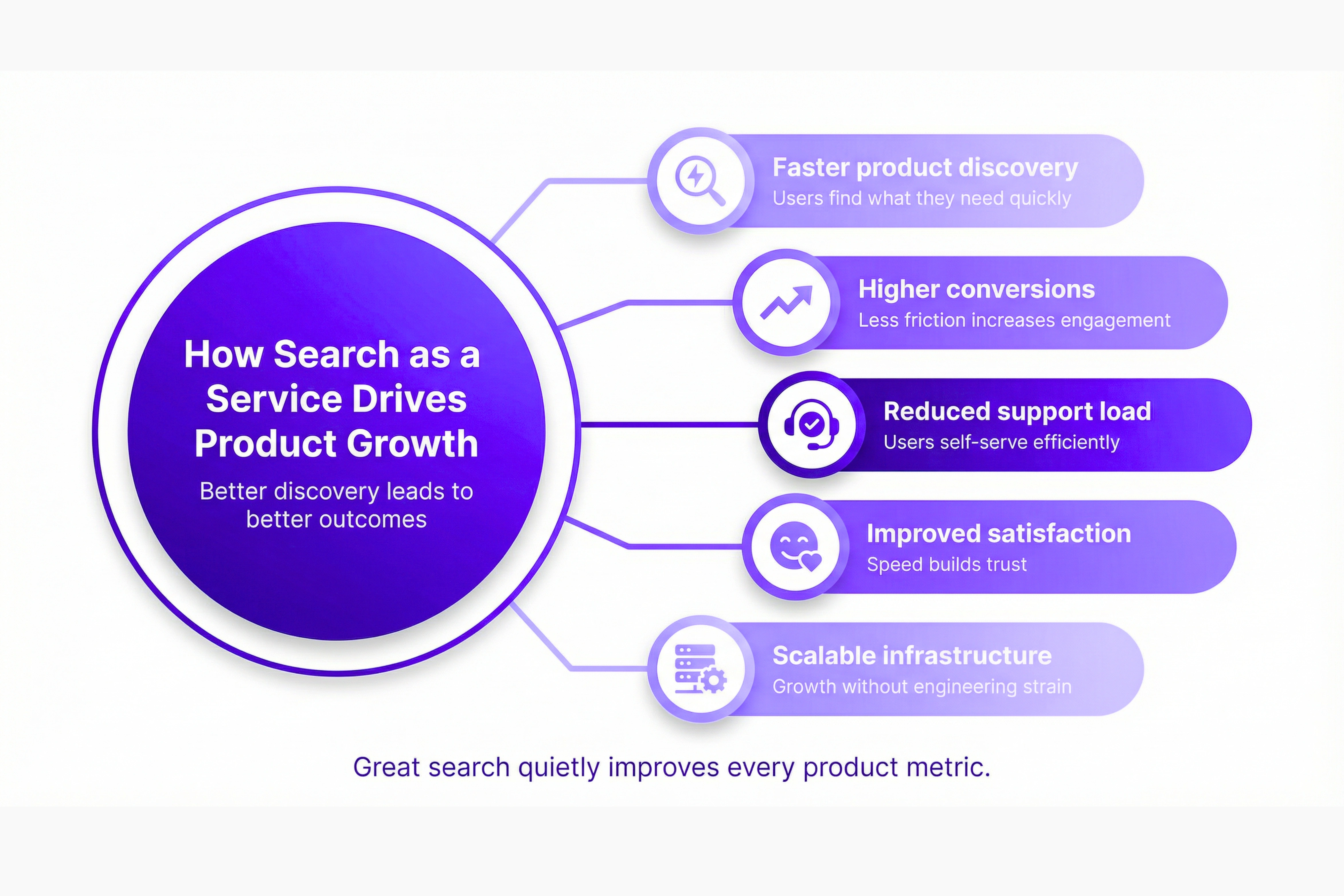
When implemented correctly, search impacts multiple layers of your product.
Improved product discovery Users find content, features, or products faster. Increased conversion rates Better search → less friction → higher engagement. Reduced support load Users self-serve instead of contacting support. Enhanced user satisfaction Speed and relevance build trust. Scalability without engineering overhead Infrastructure grows with demand.Where Search as a Service Creates Real Impact
Search infrastructure isn't just for ecommerce.
- SaaS platforms — Users quickly navigate features, settings, or documentation.
- Marketplaces — Better product filtering and discovery.
- Knowledge bases — Faster access to help content.
- Dashboards — Efficient data navigation.
- Enterprise tools — Improved workflow efficiency.
Anywhere users explore information — search matters.
When Your Product Actually Needs Advanced Search
Not every app needs enterprise search infrastructure — but many grow into it faster than expected.
Signs you've outgrown basic search:- Growing data complexity
- Rising user expectations
- Poor search feedback from users
- Scalability concerns
- Product expansion into new content areas
Ignoring search at this stage creates compounding UX friction.
Practical Steps to Implement Search as a Service
Step 1 — Audit Your Current Search Experience
Identify speed, relevance, and usability gaps.Step 2 — Map User Search Behavior
Understand what users are trying to find.Step 3 — Choose Scalable Infrastructure
Evaluate cloud-based search platforms.Step 4 — Optimize Indexing Structure
Clean data improves relevance.Step 5 — Continuously Monitor Performance
Search evolves with user behavior.Common Search Mistakes That Hurt Product Experience
Avoid these pitfalls:
- Treating search as an afterthought
- Ignoring relevance tuning
- Poor data structure
- No behavioral feedback loop
- Underestimating scalability needs
Search isn't just technical — it's experiential.
The Strategic Shift: Search as Product Infrastructure
Modern products treat search as:
👉 User experience layer 👉 Conversion engine 👉 Discovery framework 👉 Retention driver
Companies that invest in search infrastructure gain a silent competitive advantage: smoother navigation, faster engagement, and stronger product trust.
Building Products That Users Can Actually Navigate
A powerful product is useless if users struggle to find what matters.
Search as a Service is about:
- Reducing friction
- Accelerating discovery
- Scaling intelligently
- Improving user confidence
As digital ecosystems grow more complex, intelligent search becomes less of a feature — and more of a foundation.
Teams that treat search as a strategic layer — not a checkbox — consistently build products that feel faster, smarter, and easier to use. That's the kind of product thinking that separates good software from great software.
