
Affordable Ecommerce Agency in Singapore: What to Know Before You Hire
By Relish Team
Affordable Ecommerce Agency in Singapore: What to Know Before You Hire
Most Singapore businesses spend more time choosing an ecommerce platform than choosing the agency building on it. That order is wrong. The platform is a tool. The ecommerce agency is the decision. According to the Infocomm Media Development Authority, Singapore's digital economy now contributes 17.3% of GDP — and ecommerce is one of its fastest-growing segments. The businesses capturing that growth are not necessarily the ones with the biggest budgets. They are the ones that built their online stores correctly from the start.
This guide covers what an affordable ecommerce agency in Singapore actually delivers, what ecommerce development costs in 2026, which platform is right for your business, and what to ask before you sign anything.
What Does an Affordable Ecommerce Agency in Singapore Actually Offer?
Affordable does not mean cheap. In Singapore's ecommerce market — where consumers are experienced online buyers with high expectations — a store that does not load quickly, breaks on mobile or makes checkout confusing does not get a second chance with most visitors.
An affordable ecommerce agency in Singapore delivers strong, reliable value for the investment. The question to ask is not who charges the least — it is who delivers the most dependable outcome for what they charge.
What you are actually paying for beyond the build
You are paying for a team that has already solved the problems your store will face before you have encountered them. Platform selection, checkout flow optimisation, PayNow integration, GST-compliant invoicing, mobile-first design for Singapore's mobile-dominant market — these are not standard services. They are the decisions that determine whether your store converts or sits quietly underperforming.
How to evaluate an agency proposal in Singapore
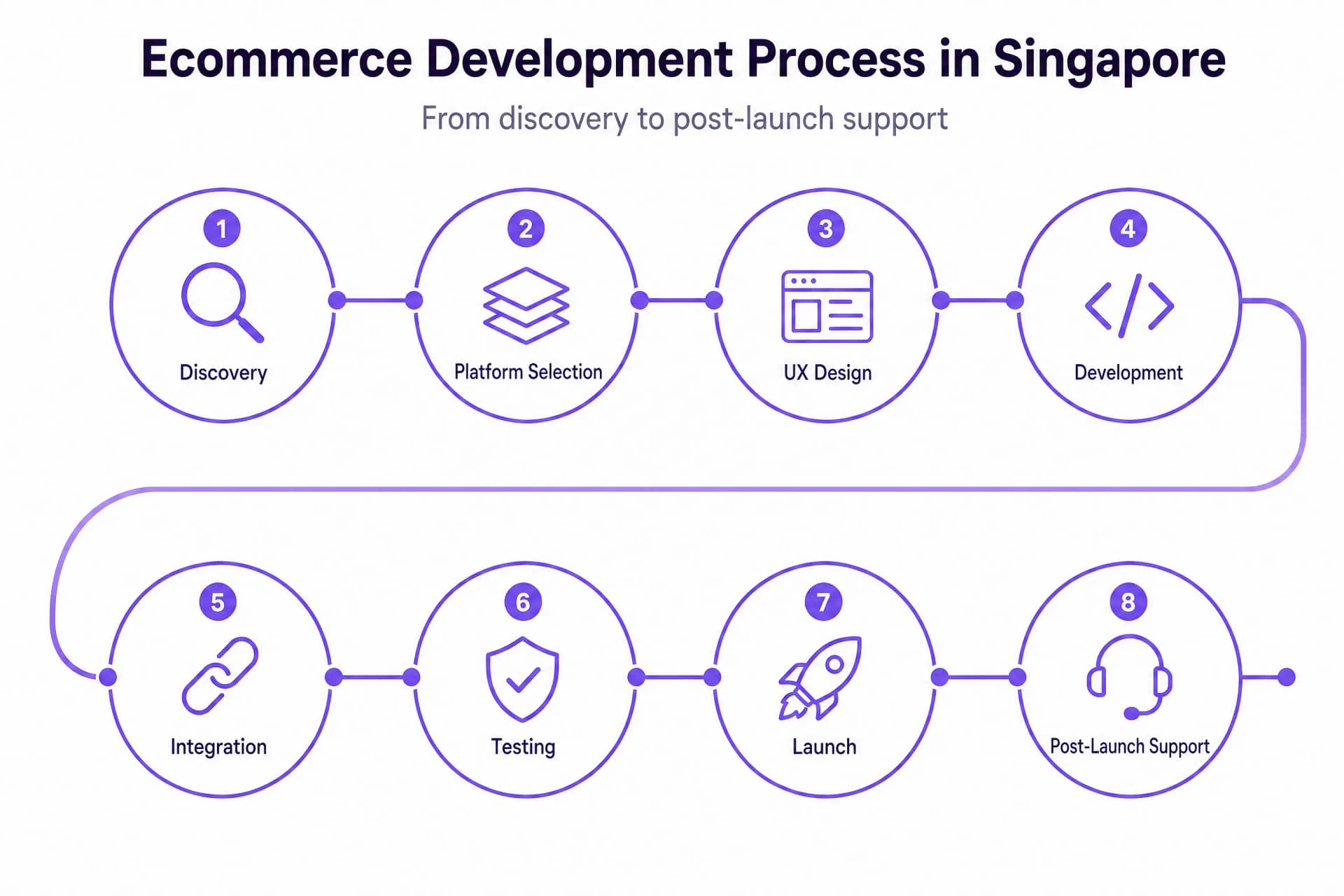
Compare proposals based on what is explicitly included — platform selection rationale, UX design scope, integrations, testing coverage and post-launch support period. The proposal that covers more of these clearly and specifically is the more valuable one, regardless of where it sits on price comparison. Scope gaps discovered mid-project are always more expensive than scope gaps identified and addressed upfront.
How Much Does Ecommerce Development Cost in Singapore?
Ecommerce development cost in Singapore varies depending on platform, scope and the complexity of integrations required. Based on publicly available market data for Singapore agencies, here is the general range for 2026.
A standard Shopify or WooCommerce store with up to 100 products, local payment integration and basic mobile optimisation typically ranges from SGD $5,000 to $20,000. A more comprehensive build with custom product logic, multi-currency support, Southeast Asia logistics integration and a bespoke design system typically ranges from SGD $20,000 to $60,000. Custom or headless ecommerce builds for high-volume or highly complex requirements start higher and scale from there.
What drives ecommerce development costs up
- Number of product variants and catalogue complexity
- Custom checkout logic and promotional rule systems
- Payment gateway integrations beyond Stripe or PayPal — PayNow, NETS, regional gateways
- Multi-language and multi-currency support for Southeast Asian markets
- Integration with third-party logistics, fulfilment or ERP systems
- Custom mobile app alongside the web store
- Post-launch maintenance and support scope
Where scope gaps create unexpected costs
The most common source of budget overrun on ecommerce projects is scope that was assumed rather than specified. Content migration from an existing store. SEO setup and URL structure planning. Product image processing and catalogue upload. Post-launch monitoring and bug resolution. These are frequently absent from agency proposals and equally frequently assumed to be included by clients. Resolve these questions before signing — not after launch.
Building or improving an online store in Singapore or Southeast Asia?
Relish is a full-stack ecommerce development agency serving businesses across Singapore, Southeast Asia and globally. We design and build ecommerce platforms that are fast, conversion-focused and structured to grow with your business.
Talk to our ecommerce development teamShopify, WooCommerce or Custom — Which Is Right for Your Singapore Business?
You do not need to arrive at the agency conversation having already chosen a platform. But understanding the options helps you ask better questions and make a more confident decision alongside your agency. Here is a plain-language breakdown of the three most relevant choices for Singapore ecommerce businesses.
Shopify — fast launch, strong ecosystem
The most deployed ecommerce platform globally and well-established in Singapore with dedicated local support. Shopify suits brands that want a reliable, fast-launching store with a broad ecosystem of apps and integrations. Strong default mobile performance. Available in Singapore with local payment methods including PayNow through third-party integrations. The right starting point for most Singapore businesses launching their first or second online store.
WooCommerce — flexible, WordPress-native
A strong option for businesses already running on WordPress or those needing significant content management capabilities alongside ecommerce. More flexible than Shopify for custom functionality but requires more ongoing technical management. Best suited to businesses with an existing WordPress relationship, in-house technical capacity, or an ongoing agency partnership for maintenance.
Custom or headless — for scale and complexity
Brands with large product catalogues, high transaction volumes or the need for deeply customised shopping experiences benefit from a headless or custom ecommerce build. Greater control over performance, flexibility and user experience at scale. A larger initial investment that pays back as the business grows across Singapore and the wider Southeast Asian market. Any agency recommending this approach should explain specifically why it fits your situation.
Singapore-Specific Features Your Online Store Must Have
Building an ecommerce store for the Singapore market is not the same as building a generic global store. There are specific technical, regulatory and behavioural requirements that distinguish a Singapore-ready store from one that technically functions but fails to convert Singapore buyers.
Payment methods Singapore buyers expect
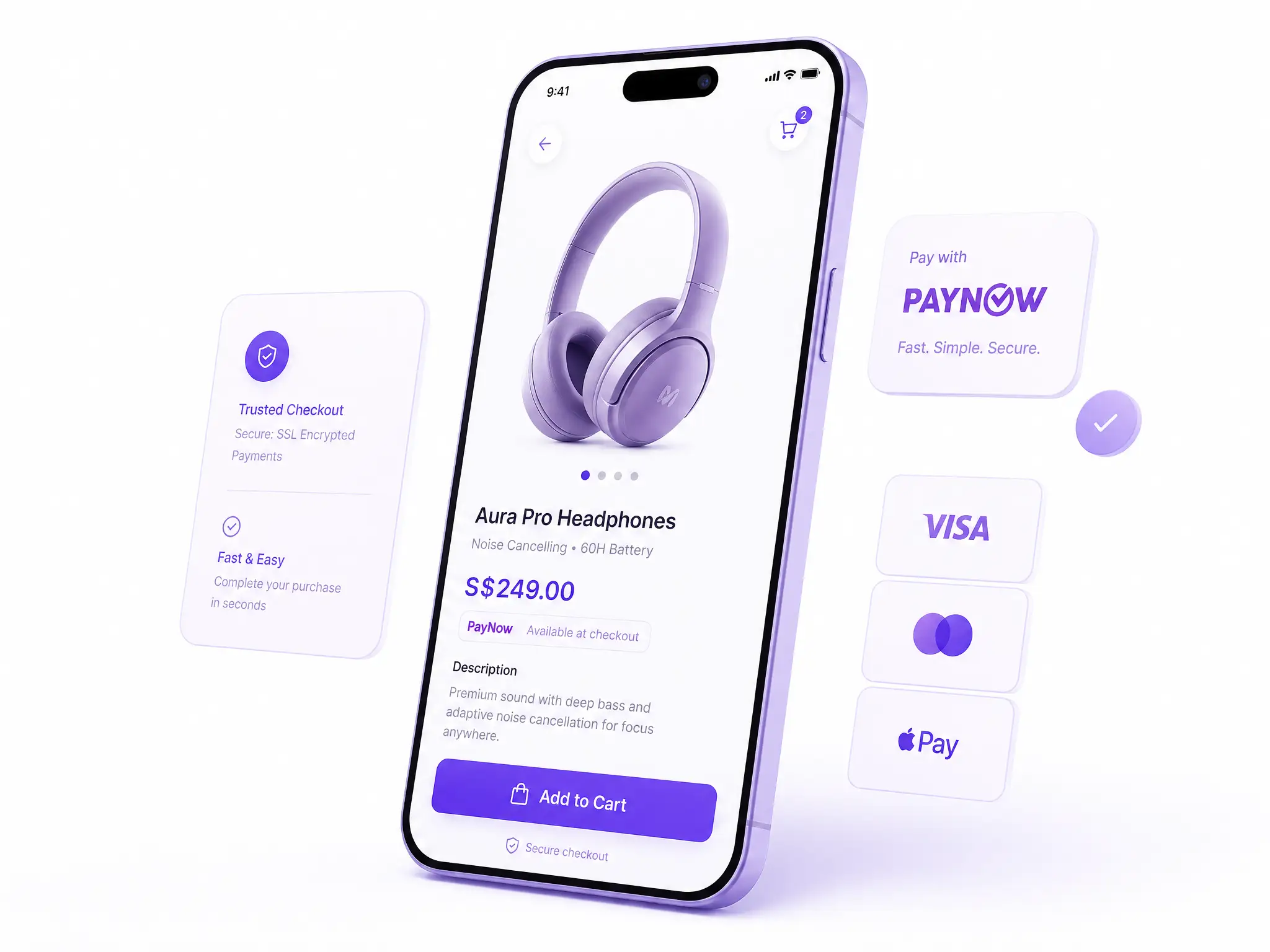
PayNow is Singapore's dominant peer-to-peer and business payment system and its absence from a Singapore ecommerce store is immediately noticeable to local buyers. NETS, major credit and debit cards, and Apple Pay or Google Pay for mobile checkout are the baseline. For stores targeting regional customers across Southeast Asia, GrabPay and regional payment processors should also be considered from the start — not added later.
Mobile-first design for Singapore's commerce behaviour
Singapore has one of the highest mobile internet penetration rates in Asia. According to Google's mobile commerce research, 61% of users are unlikely to return to a mobile site they had trouble accessing — and Shopify's own data shows that over 73% of ecommerce traffic globally now comes from mobile devices. A store that is not designed mobile-first is not designed for the majority of its potential Singapore customers. Ask to see mobile-specific work in any agency's portfolio before you commit.
Multi-currency and cross-border readiness for Southeast Asia
Singapore is frequently used as the base from which brands expand across Southeast Asia — Malaysia, Indonesia, Thailand, the Philippines. If regional expansion is part of your growth plan, the ecommerce platform architecture needs to support multi-currency pricing, localised product availability and regional logistics from the start. Retrofitting these capabilities after launch is significantly more expensive than building for them upfront.
How to Choose the Right Ecommerce Agency in Singapore
Singapore ecommerce portfolio — not general web work
General web design experience and ecommerce development experience are different disciplines. An ecommerce build involves product catalogue logic, inventory management, payment flows, order processing and often third-party logistics integrations. Ask to see ecommerce-specific case studies — not just visually impressive websites. Ask what the brief was, what they built, and what the conversion performance looked like after launch.
Post-launch support — the question most brands forget
Post-launch is where many ecommerce projects fall short. Traffic arrives, issues emerge, and the business discovers the agency considers the project complete. Ask specifically what post-launch support is included — monitoring period, bug fix response time, whether there is a retainer available for ongoing updates. A reliable agency answers these questions directly before the project starts, not after something breaks.
Platform expertise and how they make recommendations
Ask any agency why they are recommending a specific platform for your situation — and what the trade-offs of alternative platforms would be. An agency that recommends Shopify for every client regardless of requirement is an agency optimising for their own efficiency, not yours. A strong ecommerce agency in Singapore helps you choose based on your business model, your team's capacity and your growth plan. See also: website revamp or rebuild — making the right decision for your business
How Long Does Ecommerce Development Take in Singapore?
A standard Shopify or WooCommerce store in Singapore takes six to twelve weeks from discovery to launch depending on product catalogue size, number of integrations and the speed of content and asset delivery from the client side.
A more comprehensive custom or headless ecommerce build typically takes twelve to twenty weeks. The variable that most affects timeline is not agency capacity — it is how quickly the client can supply product content, brand assets and feedback during the build. An agency working from a complete brief with fast client response consistently delivers faster than one working through gaps.
What a Well-Built Singapore Ecommerce Store Delivers
Customers convert on mobile as well as desktop
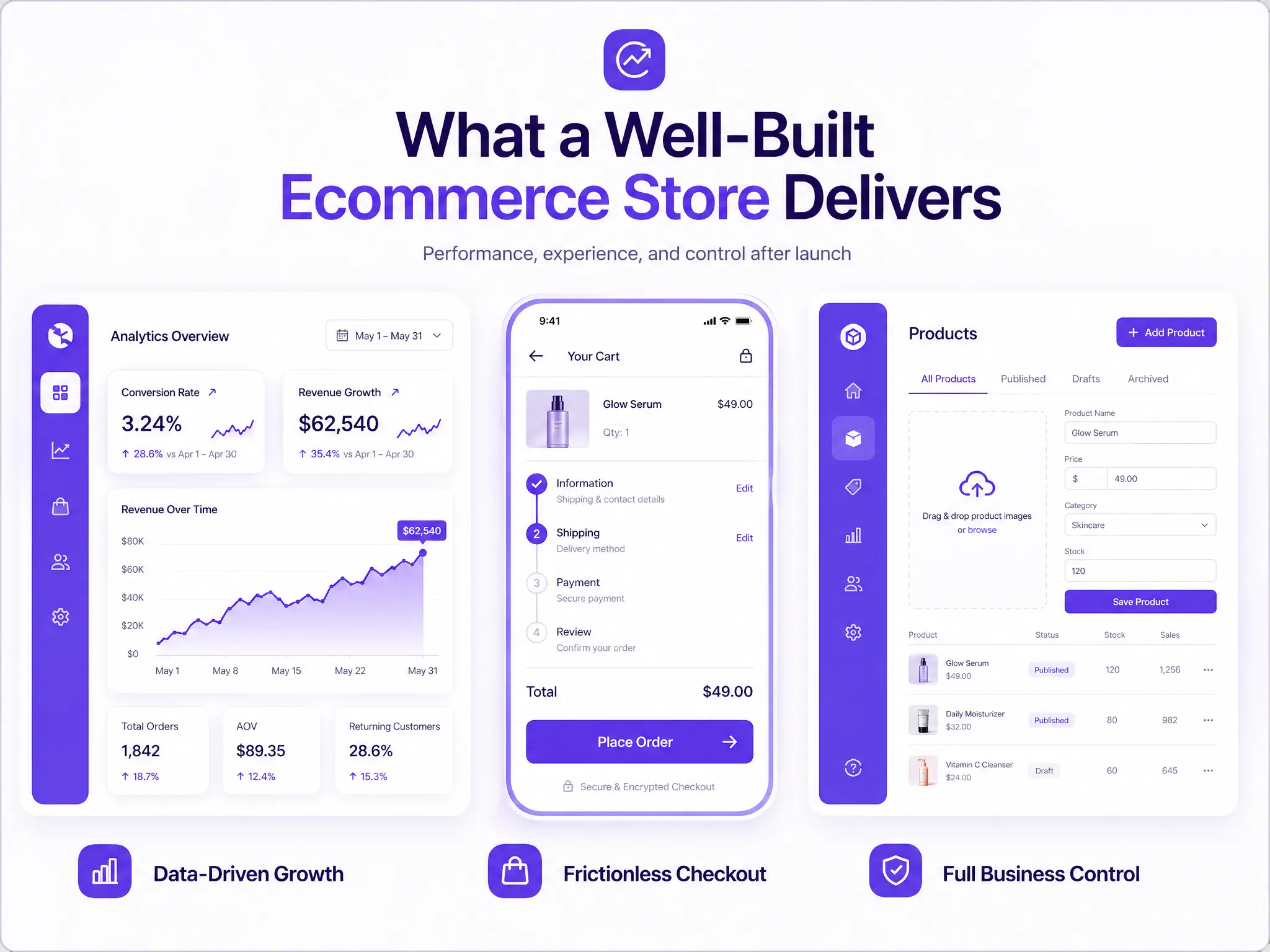
A well-built Singapore ecommerce store performs on mobile first. Fast load times, an intuitive product discovery experience, a checkout that works without friction on a phone screen and payment methods Singapore buyers trust — these are the fundamentals. When they work together, mobile conversion rates approach desktop rates rather than falling significantly behind them.
The platform scales across Southeast Asia
A well-architected ecommerce platform grows with the business. New product categories, new markets, promotional campaigns, currency expansion across Malaysia, Indonesia and Thailand — these are accommodated within the existing structure rather than requiring a rebuild. These capabilities are the result of decisions made during the initial build, not features added after the fact.
Your team operates it independently after launch
Adding products, running promotions, reviewing order data and updating content should all be achievable without developer support. A store your team can operate confidently is a store that stays current, responds quickly to market opportunities and costs significantly less to maintain over time. Ask to see the admin experience of any platform an agency recommends before you commit.
Frequently Asked Questions About Ecommerce Development in Singapore
How do I find an affordable ecommerce agency in Singapore?
Define what your store needs to do — platform, features, integrations — and request proposals from two or three agencies with relevant Singapore ecommerce portfolios. Compare proposals based on what is explicitly included in scope, not just the total figure. The most reliable indicator of value is an agency with a transparent process, relevant local experience and clearly documented scope.
How much does ecommerce development cost in Singapore?
Ecommerce development in Singapore typically costs between SGD $5,000 and $20,000 for a standard Shopify or WooCommerce store. More complex builds with custom logic, multi-currency support and Southeast Asia integrations range from SGD $20,000 to $60,000. Custom or headless builds for high-volume stores start higher.
Which ecommerce platform is best for a Singapore business?
Shopify is the strongest default for most Singapore businesses — fast to launch, well-supported locally and strong on mobile. WooCommerce suits businesses already on WordPress or needing significant customisation. Custom or headless builds suit high-volume stores with complex requirements or ambitious regional expansion plans.
How long does it take to build an ecommerce store in Singapore?
A standard Shopify or WooCommerce store takes six to twelve weeks from start to launch. More complex custom builds take twelve to twenty weeks. The biggest variable is how quickly the client can supply product content, brand assets and feedback during the build — not agency capacity.
Can an ecommerce agency in Singapore help me sell across Southeast Asia?
Yes. Many Singapore-based and internationally operating ecommerce agencies build multi-currency, multi-language stores designed for customers across Malaysia, Indonesia, Thailand and the Philippines. If regional expansion is part of your plan, include it in your brief from the start so the platform architecture supports it — retrofitting it later costs significantly more.
Ready to build an ecommerce store that performs from day one?
Relish is an ecommerce development agency working with brands and startups across Singapore, Southeast Asia and globally. We design, build and launch online stores that are fast, conversion-focused and built to grow — from a first store to a regional platform.
Speak to our ecommerce development team